Case Story: The new Aalborg University Hospital
Real-Time Logistics Powered by RFID
Supply chain visibility and data-driven workflows in one of the world's most modern hospitals. The new Aalborg University Hospital, opened in March 2026, is one of Denmark's most advanced hospitals. It is also designed to operate as a mission-critical logistics hub for the North Denmark Region, serving more than 600,000 residents.
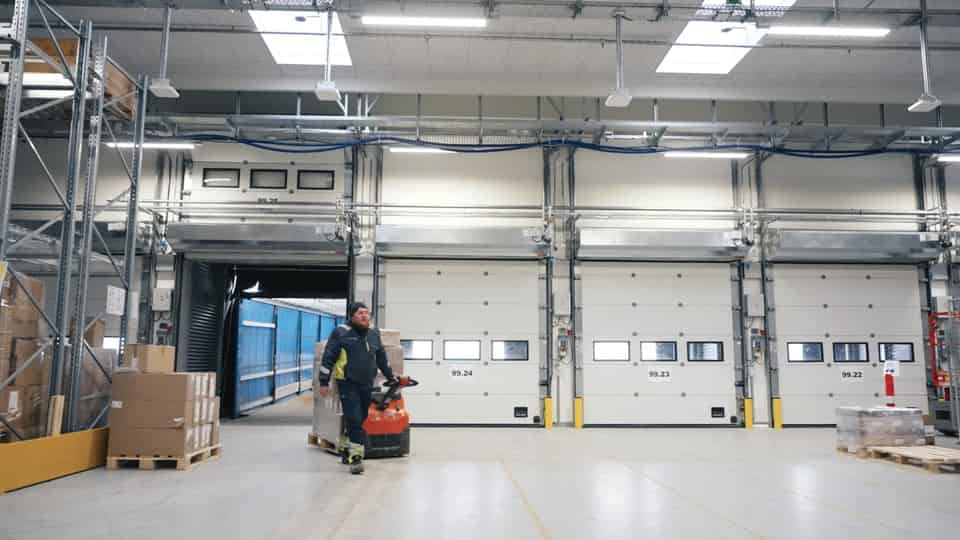

A hospital designed with automated logistics operation - built with real-time insight
Every day, thousands of assets move through the hospital and across the hospital supply network — beds, sterile trolleys, supply cages, medical equipment, food trolleys, waste containers, blood sample boxes, etc. Behind advanced surgery and clinical care lies a complex supply chain, where timing, visibility, and coordination are essential.
To operate reliably on this scale, real-time data is not optional — it is a prerequisite. The new Aalborg University Hospital, therefore, needed a solution that could provide full supply chain visibility and enable coordinated, data-driven decision-making across departments, functions, and hospitals in the region.
The need for visibility and operational efficiency in a complex operation
New Aalborg University Hospital manages a massive logistics volume, where every flow directly impacts operational efficiency and security of supply.
Three core challenges drove the need for a Real-Time Location System (RTLS) based solution:
1. One shared source of item and asset location Without real-time visibility, it was difficult to know which assets were in use, in transit, or ready for use — particularly across bed flows, medical, technical units, sterile goods, and regional deliveries.
2. Automation of complex workflows Several processes depended on verbal coordination and manual registrations. This created variability and made it difficult to ensure consistency, scalability, and predictable supply operations.
3. Governance, compliance, and precision in critical processes Hospital operations are governed by strict regulations and internal rules. Sterile processing, surgical instruments, bed washing, textiles, kitchen operations, and laboratory flows all require documented proof of when assets were used, cleaned, sterilized, and made available again.
Manual processes made it difficult to ensure consistent compliance with requirements such as:
- Sterile handling and cleaning documentation
- Time-based washing cycles for beds and textiles
- Traceability of surgical tools used for specific procedures
- Proof of compliance for audits and quality assurance
Reliable, automated traceability was required to ensure both operational stability and regulatory compliance.
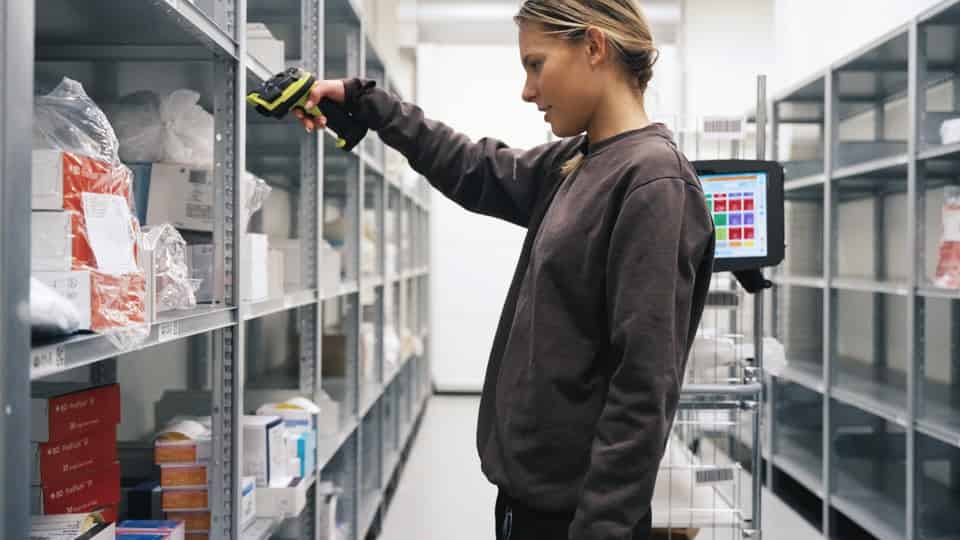
- Beds – Automatic registration throughout the entire washing and preparation flow
- Sterile trolleys – Precise location data ensures stable operations and correct allocation
- Medical equipment – Real-time status visibility: in use, in storage, or ready for use
- Supply cages – Automatic task generation upon arrival
- Food trolleys – Tracking ensures timely delivery and documented compliance with time requirements
- Waste containers – Registration upon filling automatically triggers transport tasks
- Blood sample boxes – End-to-end tracking from regional medical centers to the laboratory
- Textile, medicine supplies and much more..
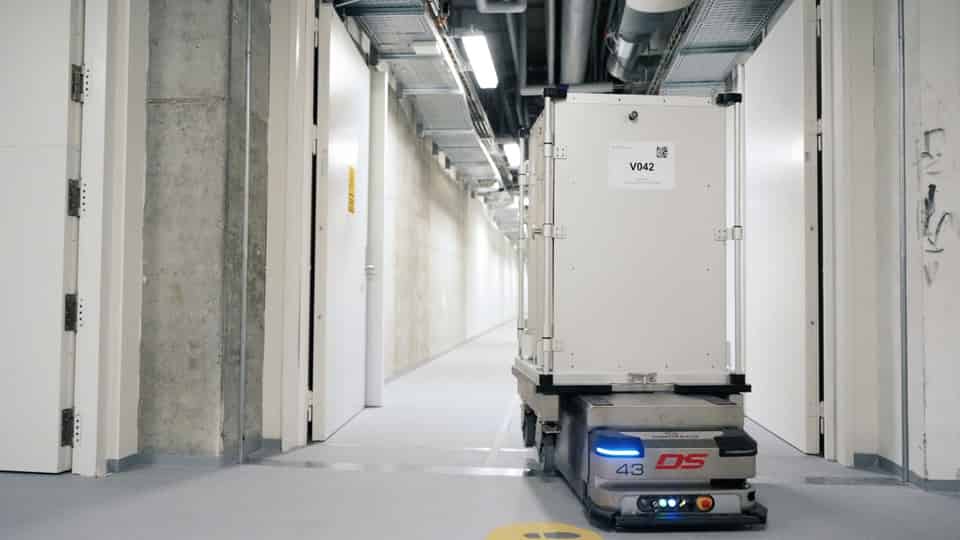
- Reduced search time
- More predictable processes
- Consistent and standardized workflows
- Improved asset utilization
- Automated task execution
- Data-driven capacity and resource management
More Healthcare Case Stories
See how RFID, RTLS, and intelligent automation create real-time visibility and seamless logistics across one of Europe's largest hospital operations.
Bradford NHS Trust renews its license for Lyngsoe Systems’ X-Tracking™ solution until 2030 and is set to roll out asset tracking to St. Luke’s Hospital.
Explore how Aarhus University Hospital (AUH) leveraged RFID-technology to streamline workflows, reduce search time, and optimize logistics.
Discover how NHS Lothian is revolutionizing their hospital logistics with Lyngsoe X-Tracking™. Learn how this integration enhances patient safety and streamlines inventory management.
Royal Cornwall Hospitals NHS Trust was invited to participate in the governments’ Scan4Safety pilot programme in 2016, making it one of the first six NHS Trusts in England to implement GS1 standards for the asset tracking and identification of patients, medicines and equipment.