Hospital asset tracking for real-time control
Hospitals operate in complex environments where equipment must be available at the right time and place. Yet many healthcare organisations struggle with limited visibility of their assets, moving from searching for missing equipment towards real-time tracking and operational control.
Hospital asset tracking systems enable healthcare providers to improve efficiency, reduce delays, and deliver better patient care.
What is hospital asset tracking?
Hospital asset tracking (also known as healthcare asset tracking) is a system that monitors the location, status, and usage of medical equipment in real time.
These systems typically use technologies such as:
- RFID (Radio Frequency Identification)
- RTLS (Real-Time Location Systems)
- Sensors and connected devices
This enables continuous visibility across hospital environments.
Optimised management of medical equipment in hospital operations
The challenge of managing medical equipment
Without effective healthcare asset tracking, hospitals often face:
- Time wasted locating medical equipment
- Missing or misplaced assets
- Over-ordering due to a lack of visibility
- Inefficient workflows and delays
- Increased operational costs
These challenges impact both staff productivity and patient outcomes.
Key benefits of healthcare asset tracking
- Real-time location of medical equipment
- Reduced time spent searching for assets
- Improved equipment utilisation
- Fewer losses and lower replacement costs
- Increased staff efficiency
- Better patient care and workflow optimisation
How Lyngsoe approach healthcare asset tracking
At Lyngsoe, asset tracking is part of a larger, connected healthcare solution.
By integrating real-time data capture with hospital systems, organisations can move from manual tracking to automated, data-driven operations.
This creates transparency across departments and ensures equipment is always available when needed.

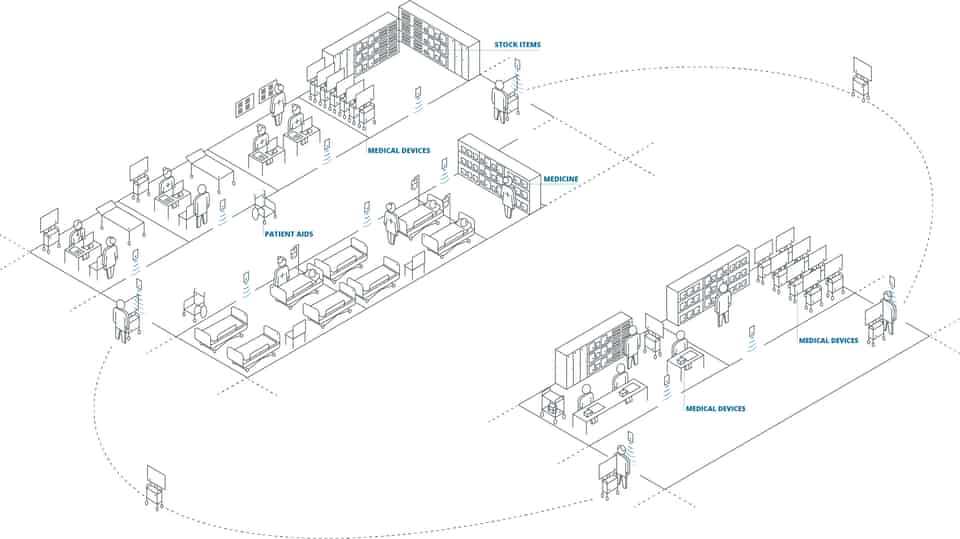
How hospital asset tracking systems work
A hospital asset tracking system typically works by:
- Attaching a tag to medical equipment
- Capturing location data via readers or sensors
- Sending data to a central platform
- Displaying real-time insights in dashboards
This provides a continuous overview of asset location and movement.
How it creates value in healthcare operations
Hospital asset tracking systems transform operations from reactive asset management to proactive, data-driven decision-making.
This enables hospitals to:
- Improve resource planning
- Reduce delays in treatment
- Optimise equipment usage
- Increase operational efficiency

Our Success Stories
See how we help customers improve visibility, efficiency, and operational performance across complex logistics operations.
Get the Latest News on Tracking Technologies
FAQs
What is hospital asset tracking?
Hospital and healthcare asset tracking is the process of monitoring medical equipment in real time to improve availability and efficiency. By providing continuous visibility into asset location and usage, hospitals can reduce search time, optimise workflows, and ensure that critical equipment is available when needed.
How does healthcare asset tracking work?
Why is medical equipment tracking important?
How does Lyngsoe support healthcare asset tracking?