Top RFID Trends: From Operational Insight to Business Value
Supply chain and logistics have long been about efficiency: moving goods faster, at lower cost, and with fewer resources. But today, RFID is helping create a new level of operational control. Volumes are growing, flows are becoming more complex, and the tolerance for errors has dropped significantly.
What could previously be handled manually or through isolated improvements now requires something different: control. Not just control of goods, but control of data.
At Lyngsoe, we work with some of the world's largest companies. Across industries, we see the same shift: competitive advantage is no longer created by individual technologies, but by the ability to understand, validate, and act on what is happening in the flow in real time.

1. From Visibility to Validated Data
For years, the goal has been visibility: being able to see where goods are located and what has happened in the process. RFID has helped make that possible. But visibility is no longer enough.
If data is inaccurate, inconsistent across systems, or not updated close to real time, it creates as much uncertainty as insight. This is where many companies still lose momentum.
According to Henrik Schärfe, Senior Business Architect, PhD at Lyngsoe, this is why the focus is shifting from collecting data to ensuring its quality.
“When we talk about ‘validate,’ we are not just talking about data quality. We are talking about true data collaboration, where we match the customer’s data with our readings in real time. It is the combination of data quality and process quality that creates fewer errors and more consistency in operations.”
When data is validated continuously, it becomes actionable. This means companies can not only see what went wrong, they can act while it is happening.
2. From "Count" to "Transform"
Most companies have already taken the first steps. They can count their goods. Many can also track them through parts of the flow. But the market has moved forward.
Today, the expectation is that goods can be located accurately and in real time. Not only at checkpoints, but continuously throughout the process. And for the most advanced companies, the development does not stop there. As Henrik Schärfe notes, it is about turning data into action.
"What we are seeing is a shift in demand. Customers no longer just want data. They want to use it actively to make decisions and optimize their operations across departments."

3. From Isolated Automation to Data-Driven Operations
Automation has become standard. But many companies find that the benefits fail to materialize or are smaller than expected.
The explanation is often the same: the data foundation is not strong enough. When the data foundation is uncertain, friction occurs:
- systems stop
- manual checks return
- confidence in automation disappears
At Lyngsoe, we see that companies only realize the full value of automation once they have created a stable data layer where events are recorded accurately and in real time.
4. From AI Sprinkles to Precise Problem-Solving
AI is no longer a future scenario in logistics. It is already part of the work to create more precise, data-driven, and efficient supply chains.
However, AI only creates operational value when it is based on accurate and validated data that reflects reality. As Henrik Schärfe explains, real-time insight, location accuracy, and item-level traceability are essential:
"AI only becomes interesting when you have control of your physical data. If you do not know exactly where your goods are and what is happening to them, you are optimizing based on assumptions, not operations."
5. From Flow Errors to Market Advantage
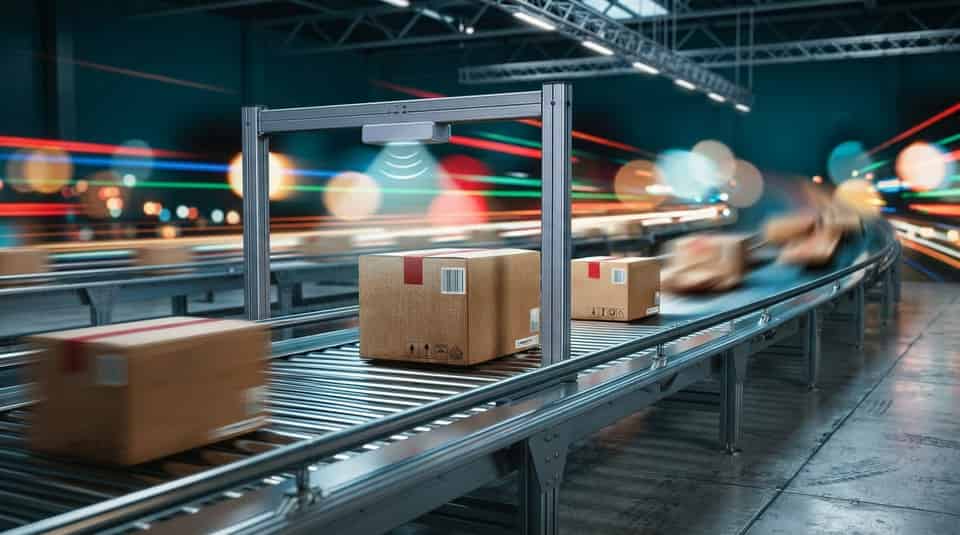
In a more complex supply chain, errors are no longer something companies simply have to accept. The ability to prevent them has become a competitive advantage.
Misdeliveries, missed scans, and manual processes affect more than costs. They affect customer satisfaction, delivery reliability, and ultimately the business.
Companies no longer want to discover errors too late. They want to prevent them. This requires validated data throughout the flow.
RFID-Validated Data Will Decide Who Wins
Across all five trends, one thing is clear: Technology alone no longer determines who succeeds. The ability to create value from data does.
When companies can find, validate, and act on what is happening in operations, they gain a stronger foundation for optimization, automation, and better decision-making.
At Lyngsoe, this is exactly the development we see among some of the world's and Denmark's largest organizations, including Delta Air Lines, 1-800-Flowers.com, HAVI Logistics, Terma, BoConcept, and Aarhus University Hospital.
Our Success Stories
See how we help customers improve visibility, efficiency, and operational performance across complex logistics operations.
FAQs
What makes RFID valuable beyond basic tracking?
RFID becomes valuable when it creates reliable, real-time data that can be used to improve decisions, reduce manual work, and bring more control to complex operational flows.
Why is validated data important in supply chain and logistics?
Validated data helps companies trust what their systems are telling them. When data reflects the actual movement of goods, teams can act faster, prevent errors earlier, and support more consistent operations.
How does RFID support automation?
RFID supports automation by capturing data automatically as goods, assets, or containers move through the flow. This reduces the need for manual scans and helps create a stronger data foundation for automated processes.
What role does RFID play in AI-driven operations?
AI depends on accurate operational data. RFID helps provide real-time insight into physical flows, making it easier for companies to identify patterns, respond to exceptions, and make data-driven decisions based on what is actually happening.
How can companies start creating more value from RFID?
The first step is to look beyond visibility and assess whether RFID data is accurate, timely, and connected to the right processes. From there, companies can use the data to improve workflows, strengthen automation, and turn insight into operational value.